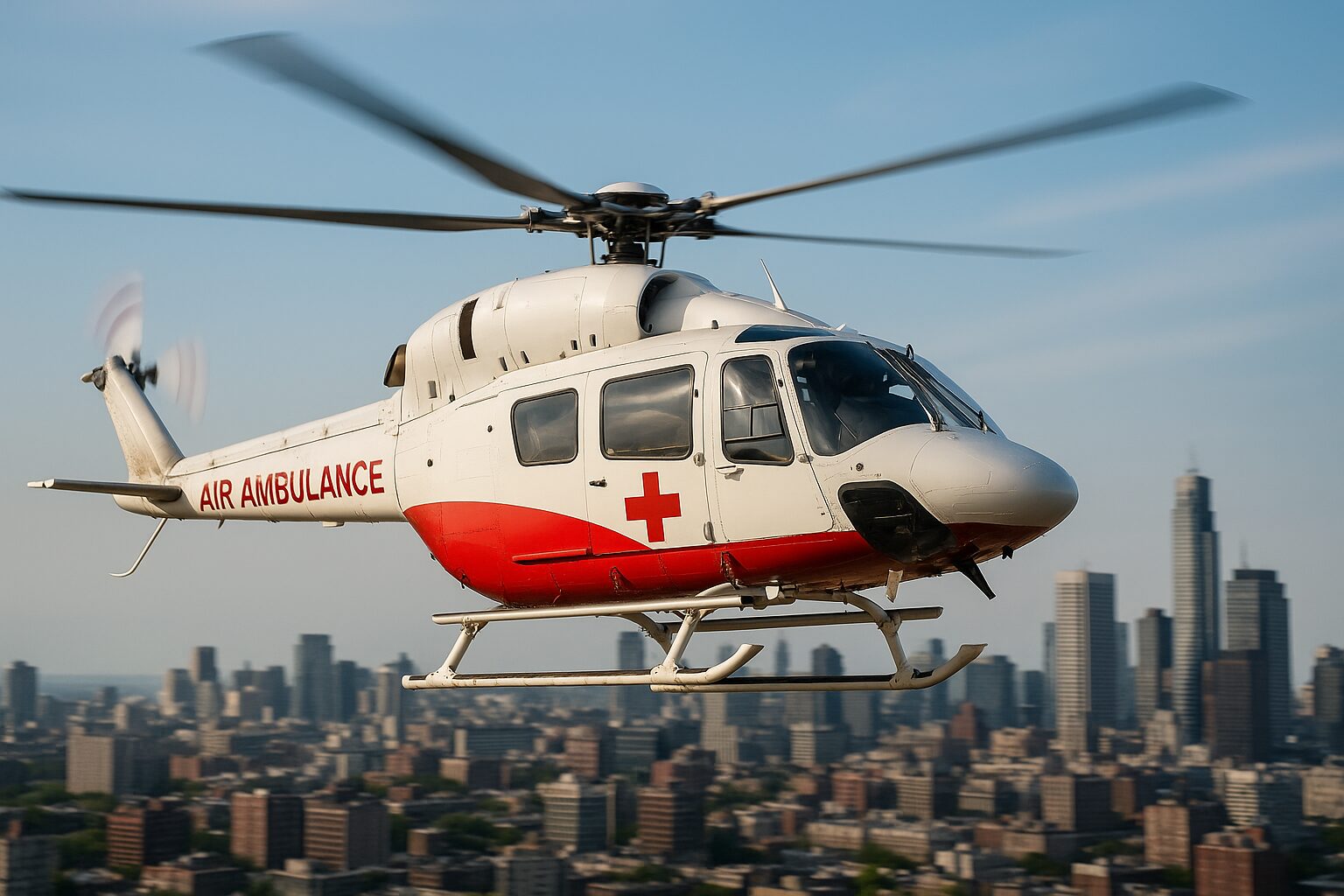
When people talk about medical air ambulance, most imagine only a fast-flying aircraft moving a patient to nearest health centre. But inside such an aircraft is a small hospital, where every detail has been thought out down to the second and centimeter.
The clinical care team works in confined spaces, with vibrations and at high altitudes, but must provide clients with same level of care as in a health centre. To understand how such mobility in medicine is possible, it is worth taking a look inside a medevac plane to see what air ambulance equipment is used and which professionals are on hand to assist clients in the course of the flight.
What’s hidden on board a rescue plane
The interior of a medevac plane must be carefully organized to accommodate all the necessary equipment and treat clients during the flight. Let’s take a closer look at what’s on board a rescue plane.
1. The newest medical devices
Modern air ambulance transportation is equipped with the latest devices. With their help, medics are able to furnish a high level of acute care in the course of flight. On board, there are a large number of the same instruments as in a hospital ward, but everything is more compact.
Among the most important instruments are a ventilator, a defibrillator, and other items that are essential for maintaining stable condition of patients with serious injuries and illnesses in the course of flight.
The aircraft are equipped with the instruments and technology that each patient needs individually. For people with heart disease, the aircraft are equipped with electrocardiograms to monitor cardiac activity. Such innovative technologies are crucial when it comes to urgent life-saving situations.
2. Life support system
Rescue aircraft are always equipped with advanced life support systems because they often have to deal with emergencies and dangerous situations. If a person who has difficulty breathing needs to be rescued, a ventilator becomes the most important tool on board. These devices help maintain the necessary oxygen level for clients who are in life-threatening condition.
In cases where a client requires a blood transfusion, many medevac aircraft are stocked with blood and plasma so that all necessary procedures are immediately available to clients.
3. Oxygen support
Any rescue aircraft must be equipped with a safe oxygen supply. Flying at high altitudes can have a negative effect on the respiratory tract of a person who is already in a serious condition. For such cases, aircraft are equipped with special oxygen systems that provide a continuous flow of oxygen throughout the flight.
When a patient with more critical needs requires medevac, aircraft are equipped with devices that maintain constant pressure in the airways. Such devices are crucial for the treatment of asthma and pulmonary oedema.
4. Compact medicine kits
The medical kit on board a rescue aircraft may be small, but it is full of advantages. These kits are full of essential medicines that medics use in critical situations. Among the medicines on board are painkillers, life-saving injections, and medicines used for severe allergic reactions. Medicines on board are usually carefully selected and stored so that they can be accessed immediately in an emergency.The medical team selects the medicines in the quantities that will be used.
5. Communication methods
Continuous communication is a very important aspect of the work of medevac aircraft. Such aircraft must be equipped with sophisticated communication systems, which enable communication between the medevac staff on board and the hospital to which the patient is being transported. This connection provides the necessary continuous care for the patient. These communication systems also assist pilots in the course of challenging weather conditions and enable the crew to prepare for any changes that may occur end route. Thanks to this valuable connection, the patient’s life remains safe.
Cost: key considerations
Many families encounter problems when paying for air ambulance services. The cost often varies depending on circumstances, such as the distance travelled, the client’s needs and the type of aircraft. The cost of medevac is also affected by whether the client’s condition requires special equipment.
Sometimes insurance covers part of the costs, and sometimes some companies create flexible financing terms, which makes air ambulance services more affordable.
FAQ
What equipment is available in an aeromedical evacuation?
Compact lung ventilation devices, portable monitors, oxygen support equipment and emergency procedure kits are usually carried on board. All of this is adapted for use in confined and vibrating spaces.
What equipment is available in an aeromedical evacuation?
The aeromedical evacuation is equipped with a defibrillator, resuscitation kit, immobilization equipment, oxygen supply systems and basic diagnostic devices. The kit may vary depending on the type of team.
Who works in the aeromedical evacuation service?
Such crews usually include a doctor or paramedic, a nurse, and a trained flight attendant who assists with equipment and patient safety in the course of the flight.