When lives are dangling in mid-air, poised at a precarious equilibrium between risk and safety, every minute is crucial. Air medical services, whether speeding trauma victims from mountain roads or across international boundaries, are essential components of the worldwide healthcare network. It might be cost, accessibility, and the difficulty of medical care that determines whether a jet air ambulance or an air ambulance helicopter is the correct option. This information provides the knowledge necessary for families, health plans, and hospitals to make life-saving decisions.
Speed and Distance: Comparing air ambulance planes and helicopters
Furthermore, when it comes to survival, the critical role in medical emergencies is played by speed. Here is where the air ambulance planes have the most tangible advantage due to the long route. Jets, flying up to 500-600 miles per hour, rapidly transfer patients over regional, national, and even intercontinental distances. This makes multi-hour, resource-depleting car rides two-hour flights. The latter, minimizing patient stress and helping to steady critical conditions mid-air, is also done at high speeds.
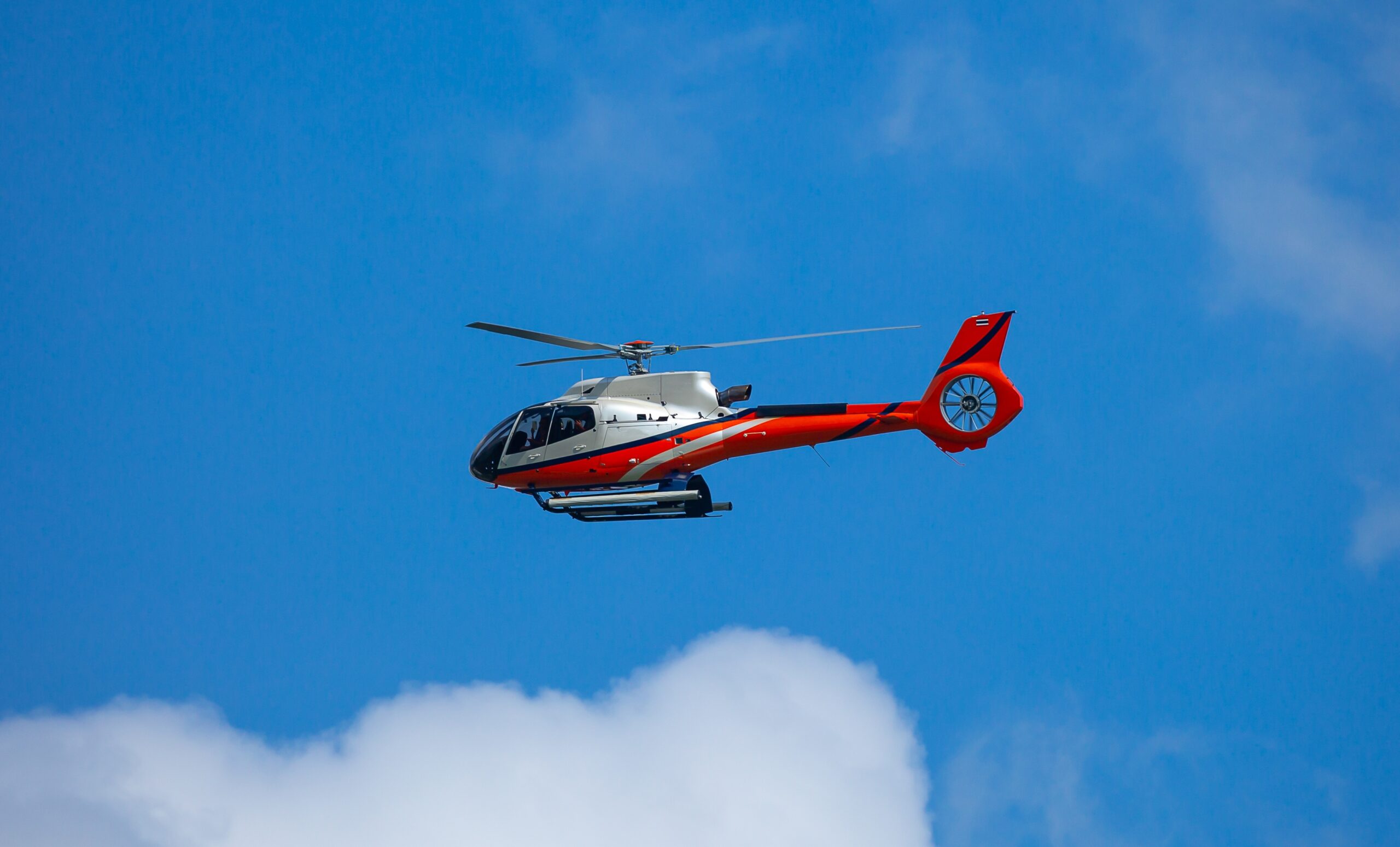
Comparatively, helicopters travel at 100-150 miles per hour. Still, they accomplish Point-to-Point rescues flawlessly throughout cities or in nearby areas. Their capability to stand over traffic jams and land within meters of an emergency scene once more saves critical minutes for trauma response. Jets do better with distance; helicopters do better with immediacy.
Accessibility and Landing Reach
Access – Jets require a runway, terminal, or airport coordination and ability for maintenance infrastructure. It severely restriction the locational potentials, but jet’s global airport network allows for unlimited connection between any two major hospitals. For long-distance patient transfers, especially international, jet air ambulance remains the first choice in terms of patient safety.
Helicopters function where runways do not. Landing on a hospital rooftop helipad, a carved rural clearing, a highway shoulder, or a mountain ridge, the consumer has capabilities unmatched by a jet. The helicopters outperform jets in disaster locations or crowded urban settings by flying the emergency team to the patient rather than vice versa.
Cabin Capacity and Medical Equipment
At the core of every flying hospital is a world of precision technology. Ventilators, ECMO systems, and neonatal incubators as well as full in-flight medical crews in a spacious jet cabin guarantee full medical care for the duration of the flight. Modern air ambulance aircraft are often referred to as airborne intensive-care units since they must transport patients on the edges of medicine’s ability to cure, including cases of acute coronary syndromes, trauma stabilization, or surgery transportation across borders.
Helicopters are equipped with some medical facilities, but space is limited. They will have the essentials: systems for delivering oxygen, monitors, and defibrillators. However, they are incapable of carrying the same payload of equipment or multiple caregivers. For short haul missions, where the most important thing is bringing the patient to the closest emergency department as soon as possible, this is acceptable.
Cost Framework and Operational Considerations
In fact, no emergency is cheap, and the cost factor is a non-negotiable criterion. The price for chartering a jet air ambulance varies from $10,000 to $20,000 per flight hour. Fuel varies from 200 to 500 gallons per hour, crew composition, and long-range navigation add to it. As a result, patients are given comfort, an extended flight range, and state-of-the-art medical customization.
Helicopters are cheaper to operate, with fuel costs at about 50 to 150 gallons per flight hour and air hours costing between $5,000 and $10,000. Cost competitiveness and operational flexibility for short-distance urban transfers or rescue operations may be achieved. The actual cost of each flight, however, may vary depending on the source of service delivery, flying distance, terrain, patient condition, etc.
See ElClinics Air Ambulance Service for a comprehensive overview of pricing parameters and guidelines for helicopter and jet transport.
Use-Case Scenarios and Emergency Contexts
Time-critical responses when every second is decisive: road accidents and stroke or cardiac arrest terminally limit the chances to live or maintain health/functioning. Helicopters are needed due to their. Their ability to take off rapidly, bypassing dense street traffic, bridges those precious minutes.
Natural disasters and evacuations beyond road reach, such as earthquakes or floods, require helicopters to carry. Patients and victims directly. As they can and take off/vacate from rough terrain or severely damaged infrastructure, they are optimal.
Long distance and international transfers occur when people need to be evacuated and. Jets serve missions for planned evacuation, specific treatment, and repatriation, general equipped for long hours. So that a patient could travel across countries or oceans and get medical treatment 24/7.
Inter-facility transports and family relocations imply moving patients between hospitals for care or to close relatives. Helicopters can be used for short hops, while jets are needed for long distances.
Comfort, Crew, and Patient Experience
A contemporary medical jet is a private clinic in the sky. It creates the impression of a private room with sound-absorbing; modifiable lighting, and a well-thought-out stretcher to make helpless patients comfortable. Medical procedures in flight are carried out by skilled paramedics, nurses, and physicians with the proper qualifications and experience for medical care in flight. Some systems even allow relatives aboard to alleviate the urgency of the situation and turn the delicate or exigent quest into something soothing and humane.
Helicopters are not as large but do the same job professionally and safely. Compactness means efficiency—patients are handed directly to emergency departments upon landing, cutting unnecessary waiting.
Types of air ambulance aircraft and Technology Spectrum
The variety of air ambulance aircraft shapes adaptability. More massive jets, such as the Gulfstream G650, facilitate long-range international flights enhanced by advanced avionics and lengthy and expansive cabins. Super-midsize models, which include the Learjet 60, balance efficiency and speed for cross-country missions. Midsize jets, like Learjet 45, cater to regional operations, while turboprops (King Air 350, for example) access rural strips with cost-friendlier profiles.
Each configuration is installed with ventilators, cardiac monitors, oxygen systems, temperature-preserved interiors. With many providers ensuring FAA-exceeding safety standards, high-limit insurance coverage-totalling $250 million-overall evidence demonstrates reliability under extreme risk.
Choosing Between Helicopter and Jet
In reality, decision-making does not even have a single rule. The patient’s condition and the distance and weather and the budget for sure help in deciding, but it is not limited. Helicopters deliver immediate rescue mobility; jets ensure long-distance precision. Both remain pillars of critical-care aviation.
For families and hospitals, experienced coordinators engaged in optimal outcomes. Different organizations have specialists that work arranging logistics, ensuring that route clearances are accurate and keeping medical readiness. In practice, obviously every effective flight is an integrated mission of technology, human compassion, and timing.
In conclusion
Both helicopters and jets are critical halves of a single life-saving system. Consistently recognizing what each is good at — whether it’s lifting patients from rooftops in crowded city centers or crossing continents overnight — ensures that patients waiting hours away from their loved ones receive their care quickly, safely, and compassionately.
FAQ
Is an air ambulance a plane or helicopter?
It can be either. While air ambulance planes typically fly the regional, national, or international mission, air ambulance helicopters are tailored for quick local rescues or immediate emergencies. Thus, the deciding factors are urgency, terrain, and distance, not a universal format.
Are helicopters or jets better?
Both have their field of proficiency. Namely, helicopters are unbeatable in the short-range maximum-speed chart for emergencies, such as crashes, natural disasters, or congested urban rescues. Extensively utilized for all other conditions, jets are perfect for swiftly transporting patients over long distances, state lines, and whole waters, as well as transporting all the requisite equipment.
How much is an air ambulance helicopter?
The average rate varies between $5,000 and $10,000 per flight hour, depending on the hourly fuel burn, the number of crew on board, or the complexity of the mission. It takes $10,000 to $20,000 per hour for a jet air ambulance, which reflects the higher fuel burn rate and increases in-passenger capacity.
What is the best air ambulance aircraft?
If the mission is evacuating patients from the urban center to the hospital, the most appropriate option is a helicopter. Otherwise, when the air ambulance arrives, the answer is the heavy or midsize jet, the best performer for interstate or international flights requiring high-end medical amenities.